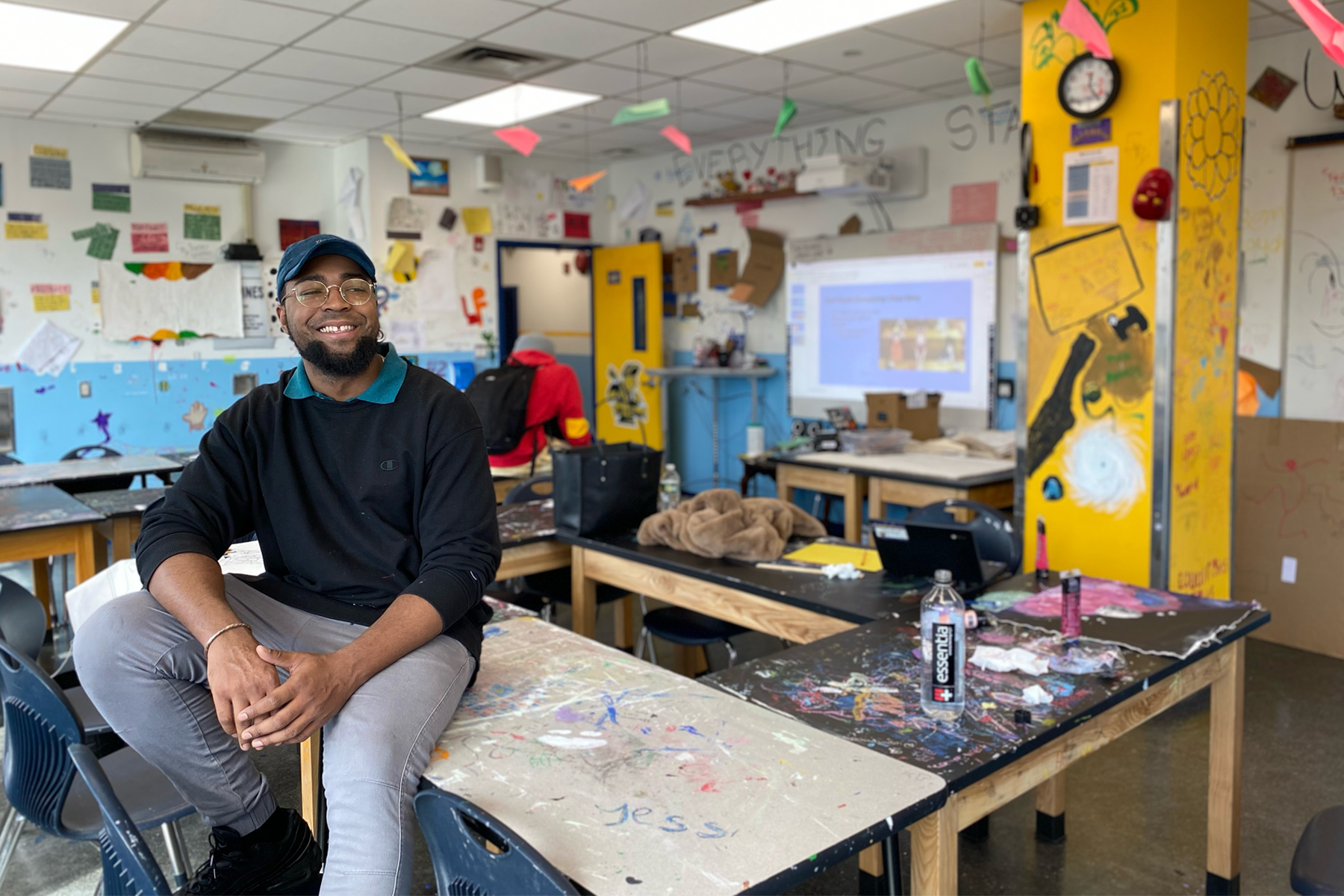
Most mornings in the art room start the same way. The bell rings, the door opens, and students drift in with backpacks half unzipped and sketchbooks tucked under their arms. Some head straight for their seats. Others wander, sharpening pencils they do not really need sharpened, talking quietly, or flipping through pages from last week. Class has not officially started yet, and everyone knows it. Those first few minutes are loose and unstructured, and that is where I notice the most interesting things.
A lot of students begin drawing before they even realize they are doing it. They doodle in the margins of their notebooks or shade the same small square over and over while waiting for instructions. Some trace lines that already exist, darkening them without much thought. Others sketch little shapes that do not turn into anything recognizable. There is no pressure in those moments. No one is watching closely. No one is grading. It is just pencil on paper, moving because hands feel restless.
I used to think of warm up drawings as a throwaway thing, something students did before the real work began. But after years of standing in that room and watching the same habits repeat, I started to see those early sketches differently. Those drawings are honest. They are not trying to impress anyone. They are not trying to be finished. They are simply marks made without fear. That is when I realized how forgiving a pencil can be.
A pencil does not lock you into a decision. You can press lightly or dig in hard. You can erase, smudge, redraw, or leave mistakes sitting there without anyone caring. Students seem to understand this instinctively. When the expectation is low, they are willing to try more. They experiment with lines they would never commit to on a final assignment. They shade awkwardly. They cross things out and move on. The paper fills up anyway.
Watching this day after day changed how I approached my own drawing. I used to sit down at home with the idea that whatever I made had to be worth the time. If it did not look good, I felt like I had wasted effort. That mindset made drawing feel heavy. Somewhere along the way, I borrowed the students approach instead. I stopped aiming for finished pieces and started letting myself make loose sketches that did not have to go anywhere.
I keep a cheap sketchbook now, the kind with paper that is not precious. I open it and draw the way students do when they are waiting for class to begin. I repeat lines. I shade random shapes. I draw the same object from different angles without worrying if it looks right. Sometimes I pause and erase. Sometimes I leave the mistake because it reminds me where I was stuck. That freedom is what makes pencil drawing feel approachable instead of intimidating.
There is something comforting about knowing you can stop, look, and try again without consequence. A pencil allows that. It gives you space to think on the page. That is probably why I recommend it so often when students ask where to start. Not as a rule, just as a suggestion. If you are curious about how others build confidence and share work made with simple tools, there is a welcoming community at FanArtReview pencil drawing where people post sketches and finished pieces side by side.
The longer I work in the art room, the more I believe progress starts with simple marks made without expectation. Those quiet minutes before class begins hold more learning than most people realize. They remind me that drawing does not need to be serious to be meaningful. Sometimes it just needs to feel safe enough to begin.
There are afternoons when the art room feels different. The noise level changes. Chairs scrape, pencils roll off tables, and someone always forgets where they put their eraser even though it is right in front of them. During those moments, I notice how often students pause mid-drawing. They lift the pencil, hover for a second, then place it back down somewhere else. That pause tells me more than the finished work ever could. It is a moment of decision that feels safe because the tool in their hand is forgiving.
Some students draw fast and loose, filling the page before I finish helping someone else find paper. Others barely make a mark for several minutes. Both approaches are fine, even if they do not realize that yet. I sometimes see frustration creep in when a line does not behave the way they expected. The pencil slips. The shading gets muddy. They sigh and look around to see if anyone noticed. Usually, no one did. That is when I quietly remind them they can erase or redraw. The relief on their face is subtle, but it is there.
I think a lot of people believe drawing skill comes from confidence, but I see the opposite most days. Confidence shows up after someone has been allowed to make small mistakes without being punished for them. Pencils make that possible in a way few tools do. There is no loud failure. No permanent mark. Just graphite that can be lifted, lightened, or worked around. That matters more than technique when someone is still figuring things out.
There was a student last year who barely spoke during class. He kept his head down and drew tiny shapes in the corner of every page. They were not impressive in a traditional sense. Little boxes, spirals, repeated lines stacked on top of each other. But over time, those shapes grew. They connected. One day I realized his page was full, edge to edge, without him ever stopping to think if it was good enough. That kind of progress does not come from instruction. It comes from permission.
Watching moments like that has changed how I talk about drawing with friends outside of school. When someone says they are bad at art, I usually ask how they learned. Most of the time, the answer involves pressure. A teacher who corrected every line. A class where finished work mattered more than trying. Or a comparison to someone who seemed naturally gifted. I wish more people could sit in an art room during those early minutes before class. They would see how natural drawing can be when no one is judging.
At home, I sometimes catch myself slipping back into old habits. I will start a sketch with a plan and immediately feel tense. When that happens, I stop and remind myself of the students. I turn the page sideways. I draw with my non-dominant hand for a bit. I scribble until the idea loosens. Those tricks are not special. They are just ways of recreating the same low-pressure environment I see every day at work.
The texture of pencil on paper still surprises me sometimes. The sound is soft but noticeable, especially in a quiet room. There is a slight drag, a resistance that makes you aware of your hand moving. That physical feeling keeps me grounded. It slows me down. I think that is another reason students gravitate toward pencils during warm ups. The tool responds immediately. There is no delay, no setup, no barrier between thought and mark.
I have learned not to interrupt those early drawing moments unless I have to. Even announcements can wait a minute or two. Once students are in that flow, breaking it can feel jarring. You can see it in their shoulders when they have to stop suddenly. I try to give them space because I know how rare that unguarded focus can be. It is fragile. Easy to lose.
Over time, those observations have softened my expectations for myself as well. I do not need every drawing session to result in something I want to show. Some pages exist only to get me comfortable again. Some sketches are just reminders that I sat down and tried. That counts. The students taught me that without ever meaning to.
If there is one thing working in an art room has made clear, it is that drawing does not begin with talent. It begins with willingness. A pencil helps because it does not demand commitment right away. It lets you test ideas, back out, and return later. That flexibility is not a weakness. It is the reason so many people feel safe starting there.
I still watch those warm up minutes every day. They never look the same, but the feeling is familiar. A room full of people easing into creativity without labels or expectations. It reminds me why I keep drawing at all. Not to finish something impressive, but to keep making marks and seeing where they lead.
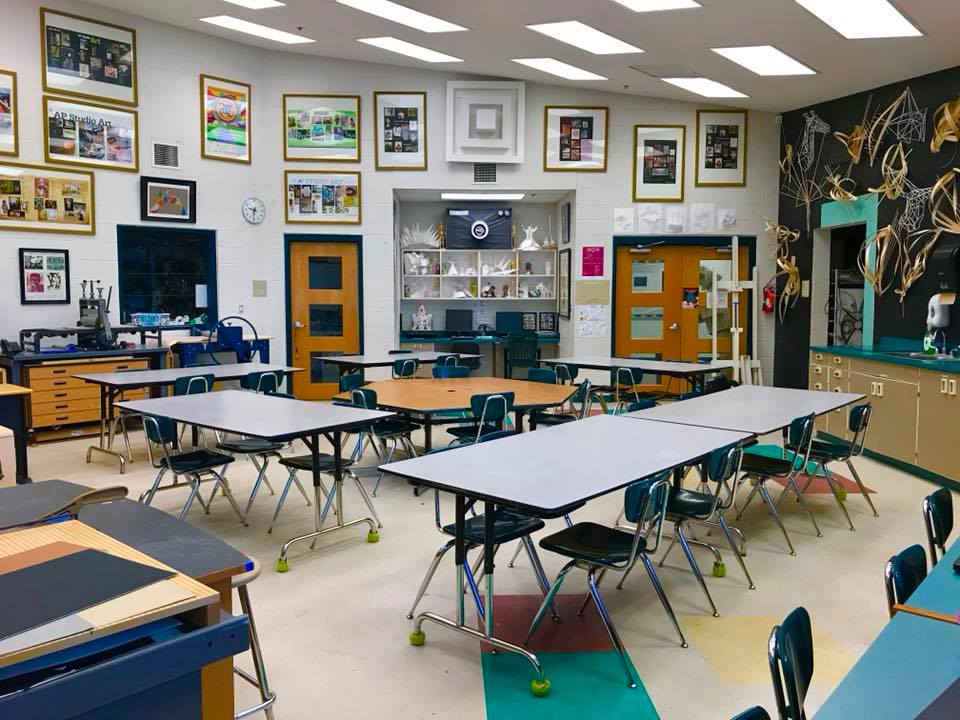
There are days when I arrive early and the room is completely empty. The lights hum softly, tables are still clean, and the floor smells faintly like dust and pencil shavings from the day before. I sometimes sit at one of the student desks instead of my usual spot. It changes how I think. The chair is a little lower. The table has old scratches carved into it. Names layered over names. Those marks feel like proof that this room has held a lot of quiet effort over the years.
I will take out a pencil and start the same way the students do. No plan. No subject in mind. Just movement. I notice how quickly my hand wants to control things, to make something recognizable. That instinct is hard to shake. But if I keep going long enough, it fades. Lines loosen. Shapes overlap. The page becomes less about results and more about staying present. That is usually when I stop worrying about whether I am doing it right.
Once class starts, the room fills in fast. Backpacks drop. Someone always asks what we are doing today even though the schedule is written on the board. During instruction time, I walk around and help where I can. I hand out paper. I find lost erasers. I answer questions that are really just requests for reassurance. Am I doing this okay. Is this wrong. Should it look like this. Most of the time, the honest answer is that it is fine to keep going.
I see students compare their work constantly, even when they pretend not to. They glance sideways. They look up and then back down quickly. That comparison often shuts them down before they have really started. A pencil can soften that moment if they let it. Because it feels temporary, it invites continuation instead of judgment. You can always say you were just sketching. Just warming up. That excuse matters more than people admit.
There was a day when a student accidentally smudged half a page while reaching for her ruler. She froze, clearly expecting frustration. Instead of erasing right away, she stared at the smudge for a long time. Then she shaded around it and turned it into part of the drawing. That moment stuck with me. Not because the result was impressive, but because she stayed with the problem instead of abandoning it. That kind of patience is hard to teach directly.
I think about that often when my own drawings go sideways. When a line lands wrong or proportions drift, my first instinct is still to start over. Sometimes that is the right choice. Other times, staying with the mistake leads somewhere unexpected. Pencils allow that choice. They do not force you down one path. They let you hover between fixing and accepting. That middle space is where learning tends to happen.
After school, the room empties again. Chairs are pushed in unevenly. Paper scraps collect near the trash can. I help tidy up, stacking sketchbooks and wiping tables. Sometimes I find abandoned drawings left behind by accident. I never look at them closely. It feels private, like reading a note someone did not mean to share. Those pages were not made for an audience. They were made to pass time, to think, to settle nerves.
That idea of drawing without an audience has become important to me. Not everything needs to be shared. Some drawings exist only to help you get through a moment. The students understand this better than most adults. They draw to stay busy, to calm down, to avoid boredom. The pencil becomes a companion rather than a performance tool. That shift changes everything.
I notice that students who draw casually during warm ups often take bigger risks later. They are less precious about their work. They try new approaches because they are already used to starting without certainty. That confidence does not come from praise. It comes from repetition. From knowing you can sit down, make marks, and survive whatever shows up on the page.
When people ask me why pencils are still relevant with so many digital tools available, I usually smile and shrug. The answer is not technical. It is emotional. A pencil does not demand a final version. It does not save progress or ask you to name a file. It simply responds. That simplicity lowers the barrier to entry in a way nothing else quite does.
At the end of the day, I lock up the room and turn off the lights. The board is half erased. A few faint lines remain where someone pressed too hard. I like leaving those behind. They feel like echoes of effort. Tomorrow morning, new students will come in and add their own marks. The cycle continues, quiet and forgiving, one pencil line at a time.
Sometimes students ask me how long it took to get good at drawing. I usually hesitate before answering because the question itself feels slippery. Good at what, exactly. Clean lines. Realistic proportions. Confidence. Enjoyment. Those things do not arrive together, and they do not follow a schedule. I tell them the truth, which is that I am still figuring it out. That answer seems to surprise them more than anything else.
I think people expect adults in an art room to have everything sorted out. Like we crossed some invisible line where uncertainty stopped. But I still sit down with a pencil and feel unsure all the time. The difference now is that I do not interpret that feeling as failure. It is just part of the process. Watching students wrestle with the same doubts has made that clear. Everyone hesitates. Everyone wonders if they should keep going.
There is a certain body language that shows up when a student is stuck. Shoulders tense. Pencil tip hovering just above the paper. A quick glance around the room. They are waiting for permission, even if they do not know it. Sometimes all it takes is a quiet nod or a simple “keep going” to get them moving again. The pencil touches down. The drawing continues. Momentum returns.
I have noticed that the most relaxed drawings often happen when no one is trying to draw something specific. When the assignment is loose or optional, pages fill faster. Students talk while they work. They laugh when something looks strange. Those drawings rarely make it onto the wall, but they carry more energy than the polished ones. You can feel it when you flip through the sketchbooks.
At home, I try to recreate that same feeling by removing expectations entirely. I draw while listening to music or sitting at the kitchen table while dinner cooks. I stop mid-page if I feel bored. I return later without guilt. This approach would have frustrated me years ago. Now it feels honest. Drawing fits into life instead of competing with it.
The physical act of erasing has become meaningful to me as well. There is something gentle about lifting graphite off the page instead of covering it up. Erasing does not mean pretending a mistake never happened. You can usually still see a trace if you look closely. That faint line reminds me of the attempt. It shows effort rather than perfection.
I see students use erasers differently too. Some erase aggressively, trying to remove every trace. Others barely erase at all, choosing to draw over mistakes instead. Neither approach is wrong. What matters is that the option exists. Knowing you can change your mind lowers the stakes. That freedom encourages risk, even if the result stays messy.
One afternoon, a student stayed after class to finish a sketch. The room was quiet except for the sound of pencils moving. She worked slowly, erasing and redrawing the same area several times. I asked if she was frustrated. She shook her head and said she was just thinking on the page. That phrase stuck with me. Thinking on the page. That is exactly what pencil allows.
I have started to believe that drawing is less about producing images and more about learning how to stay with uncertainty. A pencil helps because it responds to pressure, speed, and hesitation in real time. It records your mood whether you want it to or not. Heavy lines show tension. Light ones show caution. Over time, you can see yourself changing.
That awareness carries into other parts of life too. I notice when I rush through things unnecessarily. I notice when I avoid starting because I want conditions to be perfect. Drawing has made me more patient, not because it demands patience, but because it rewards showing up imperfectly.
Every day in the art room reinforces that lesson. Students arrive with different energy levels, different skills, different expectations. The pencil meets them where they are. It does not judge. It simply marks the page. Watching that happen over and over has reshaped how I think about progress. It is rarely dramatic. More often, it looks like someone quietly choosing to keep going.
There are moments when I catch students staring at a blank page longer than they probably mean to. The pencil rests in their hand, but nothing happens. I recognize that pause because I still feel it myself. It is not about not knowing how to draw. It is about deciding whether to begin. That hesitation is quiet but heavy. Once the first mark appears, the weight lifts just a little.
I have learned not to rush those moments. Silence can be useful. If I step in too quickly with suggestions, I can accidentally turn a private decision into a performance. Most students do not need advice right away. They need permission to start poorly. A pencil gives them that, but sometimes they need a human reminder that it is okay.
The art room has its own rhythm across the week. Mondays are slow. Fridays are scattered. Somewhere in the middle, the room settles into a steady hum. Pencils tap lightly against desks. Pages flip. Erasers squeak faintly when someone presses too hard. These sounds fade into the background until you miss them on days when the room is empty.
I think about how many drawings never leave this space. They exist only for a class period, then disappear into folders or backpacks. That feels right. Not everything needs to be saved. Some drawings are like conversations you have with yourself. They serve a purpose in the moment and then move on.
At home, I keep a small stack of sketchbooks with half-finished pages. I used to feel guilty about that. Now I see them as evidence of time spent paying attention. Some pages hold nothing but repeated lines or shaded corners. Others contain the start of something I may never return to. That does not make them failures. They did their job.
I notice that students who allow themselves unfinished work tend to draw more often. They are not waiting for the right idea or the right mood. They sit down and begin, trusting that something will happen. That habit matters more than any single drawing. It builds familiarity. The pencil stops feeling foreign.
There is also a physical comfort to drawing that I do not think gets mentioned enough. The weight of the pencil. The way it warms slightly in your hand. The soft drag across paper. These sensations anchor you in the present moment. Students who struggle to sit still often find relief there, even if they cannot explain why.
I have watched students calm themselves without realizing it. Their breathing slows. Their shoulders drop. The drawing becomes steadier. This is not something I point out. I just observe it quietly. Drawing offers a kind of focus that does not feel forced. It gives the mind somewhere gentle to land.
When I think back to my own school years, I remember being afraid of ruining the page. That fear followed me for a long time. Working in the art room has helped undo it. Seeing hundreds of pages filled with imperfect marks has made perfection feel less important. The pencil keeps moving anyway.
I still have days when drawing feels harder than it should. When nothing looks right. When erasing only makes things worse. On those days, I remind myself of the students who keep going despite that feeling. They do not expect mastery. They expect movement. That mindset carries me through.
Being surrounded by early attempts has changed how I define success. It is no longer about finishing something impressive. It is about returning to the page. Making contact. Leaving evidence that you showed up. A pencil makes that easy. It waits patiently. It does not ask for confidence before it works.
The longer I stay in this environment, the more grateful I am for those ordinary moments of drawing that no one applauds. They shape habits quietly. They teach resilience without speeches. They remind me that progress often looks small when it is happening, but adds up over time.
There is a moment near the end of class when students start packing up before they are told to. Pencils roll into cases. Papers slide into folders at odd angles. Some students linger, finishing a line they are not ready to abandon yet. Others are already halfway out the door mentally. That in-between space says a lot about how drawing fits into their day.
I notice that the students who linger are not always the strongest artists by traditional standards. They are often the ones who seem most comfortable being unfinished. They will add one more line, erase a small section, or darken a shadow without worrying about whether it improves the drawing. They are responding to the page, not judging it. That kind of engagement feels rare and valuable.
Those moments remind me that drawing is not always about intention. Sometimes it is about listening. The pencil moves, the paper responds, and the next choice appears. This back and forth feels conversational in a way that is hard to describe. You are not forcing the image forward. You are letting it show you where it wants to go.
I have learned to trust that process more over time. When I was younger, I wanted control. I wanted results. I wanted proof that the time I spent mattered. Now, I am more interested in what happens when I stay open. Pencils reward that openness. They reflect hesitation and confidence equally. They record your state of mind without asking questions.
There are afternoons when the room feels heavy. Students are tired. Energy is low. On those days, drawing becomes slower and quieter. Lines are lighter. Erasing happens more often. I used to worry that nothing was getting accomplished during those sessions. Now I see them differently. Slowness has its own value. It teaches patience in a way busyness never does.
I try to model that patience when I draw alongside students. I do not rush to finish. I pause. I look. I adjust. When they see an adult working without certainty, it gives them permission to do the same. That shared uncertainty builds trust, even if no one names it out loud.
At home, I sometimes leave my sketchbook open on the table overnight. The next morning, I see the page with fresh eyes. What felt wrong the night before often feels workable later. Distance helps. Time helps. A pencil allows you to return without penalty. Nothing has locked you out.
Students experience that too, even if they do not articulate it. They return to drawings they abandoned earlier and add something new. A shadow. A texture. A border. The drawing grows quietly, across days instead of minutes. That slow accumulation feels honest. It mirrors how understanding actually develops.
I think a lot about how much pressure people put on themselves to improve quickly. Drawing resists that timeline. It moves at its own pace. A pencil does not care how long you have been practicing. It responds the same way every time. That consistency is comforting. It removes comparison from the equation.
There is also something grounding about knowing the tool will not change overnight. Pencils are simple. They behave predictably. In a world where so much feels unstable or constantly updating, that reliability matters. Students pick up a pencil and know what to expect. That familiarity lowers anxiety before the work even begins.
I have watched students who struggle in other classes relax in the art room. Their posture changes. Their voice softens. Drawing gives them a way to engage without pressure to speak or perform. The pencil becomes a bridge between thought and expression that feels manageable.
These observations have reshaped how I think about creativity overall. It is not a burst of inspiration followed by a finished product. It is a series of small decisions made in response to what is already there. A pencil supports that process quietly. It stays out of the way while still offering feedback.
By the time the bell rings and students file out, the room holds the evidence of those decisions. Marks remain. Smudges linger. Some drawings are complete. Others are clearly mid-thought. I like that mixture. It reflects reality better than a wall of finished work ever could.
As the year moves along, I start to recognize patterns in how students approach their work. Early enthusiasm fades for some. Others grow more curious. A few surprise themselves by sticking with drawing longer than they expected. I do not point these shifts out. I just notice them. Watching that slow change feels more meaningful than seeing a single strong piece at the end of a unit.
There is one student who always sharpens their pencil even when it does not need it. I think it is a way to delay starting, to buy a few extra seconds before committing to the page. I recognize that habit because I do the same thing at home. I line things up. I adjust the paper. I hesitate. Eventually, the pencil touches down, and the delay feels unnecessary in hindsight.
That hesitation has taught me something important. The hardest part of drawing is not the skill itself. It is agreeing to begin without knowing where you will end up. Students feel that. Adults feel it too. A pencil makes that agreement easier because it does not feel permanent. It feels like a conversation you can walk away from and return to later.
I see how pencil drawing fits into students lives in ways they rarely talk about. Some sketch during other classes. Others draw on scrap paper while waiting for rides. The drawings are not ambitious. They are personal. Little records of boredom, curiosity, or stress. That quiet usefulness matters more than polished outcomes.
When students show me those casual sketches, they often apologize first. They say it is nothing. I tell them that is usually the best kind. Those drawings were not made to be seen. They were made because the pencil was there and the hand needed something to do. That honesty shows in the marks.
I have started to value those unplanned moments more than anything else. They remind me that drawing does not have to be productive to be worthwhile. It can simply exist alongside the rest of your day. A pencil fits easily into that role. It does not demand focus for long stretches. It accepts short bursts of attention.
At home, my sketchbooks reflect that same rhythm. A page here. A few lines there. Sometimes weeks pass without opening one. Other times I draw several days in a row without thinking about it. I no longer track progress the way I used to. I trust that showing up occasionally is enough.
Working in the art room has softened my relationship with improvement. I no longer chase it. I notice it quietly when it happens. A steadier line. A willingness to leave mistakes visible. A little less hesitation before starting. These changes arrive slowly, almost invisibly.
Students often believe improvement should feel dramatic. They expect a clear before and after. When that does not happen, they assume nothing is changing. I wish they could see what I see from the side of the room. Small shifts in posture. Longer attention spans. Fewer erasures driven by panic.
Those subtle changes are easy to miss when you are focused on outcomes. A pencil helps redirect attention back to the act itself. The movement. The pressure. The response of paper. That focus grounds you in the present rather than pulling you toward imagined results.
I think that is why drawing feels approachable to so many students once they give themselves permission to be unfinished. The tool supports that mindset quietly. It does not celebrate. It does not judge. It simply responds, line after line.
As I watch another group of students cycle through the room each year, I carry these observations with me. They shape how I draw. They shape how I talk about art. Most of all, they remind me that progress does not announce itself. It happens while you are busy making simple marks and trusting that they matter.
Late in the semester, I start seeing a different kind of confidence in the room. It is not loud or obvious. It shows up as comfort. Students sit down faster. They pick up their tools without scanning the room first. They make marks sooner. That ease tells me more than any finished piece ever could.
I notice it in myself too. When I sit down to draw now, there is less negotiation. I do not talk myself into it as much. The page no longer feels like a test. It feels like a place to spend a few minutes. That shift did not come from improvement in skill. It came from repetition and lowered expectations.
There is a freedom in knowing that not every drawing session needs a goal. Students sense that when they see adults draw without performing. When I sketch alongside them and leave things unresolved, it quietly reinforces that the act itself is enough. They stop asking what it is supposed to be and start asking what happens next.
Some of the most relaxed moments in the art room happen when we are waiting. Waiting for instructions. Waiting for the bell. Waiting for someone to finish setting up. Those pauses invite casual drawing. The pencil moves almost on its own. The pressure disappears because the time is borrowed, not scheduled.
I have come to think of those moments as the foundation of pencil drawing, even if no one labels them that way. They teach comfort with uncertainty. They build familiarity with the tool. They show that drawing can live in the margins of life rather than demanding center stage.
At home, I lean into that same idea. I draw while something else is happening. While water boils. While a show plays quietly in the background. The drawing does not need full attention to be worthwhile. It just needs presence. That approach keeps me coming back.
I used to believe that improvement required discipline and structure. Now I see that consistency matters more, even if it looks casual from the outside. Students who draw a little every day, without pressure, often grow faster than those who wait for perfect conditions. The pencil rewards familiarity.
There is also a sense of ownership that develops over time. Students begin to recognize their habits. Heavy lines. Light shading. Certain shapes they return to again and again. Those patterns become part of their visual language. They are not taught. They emerge.
I find comfort in that idea. It suggests that drawing is not something you conquer. It is something you live with. The pencil becomes a companion rather than a challenge. That relationship changes how you show up.
Toward the end of the year, students clean out their folders. Old drawings get tossed or folded away. Some keep everything. Others discard most of it. I do not judge either choice. What matters is that the pages existed at all. They held moments of attention that would otherwise be forgotten.
I think about how many of my own drawings have disappeared over time. Lost sketchbooks. Thrown away scraps. At first, that bothered me. Now it feels appropriate. Drawing does not need to leave a permanent record to matter. It does its work in the moment.
That realization has taken pressure off my relationship with art entirely. I no longer feel the need to justify time spent drawing. It supports me quietly, the way it supports the students. A few minutes of focus. A pause in the day. A chance to notice.
As another class period ends and students head out, I look around the room one more time. Marks remain on pages. Some dark. Some faint. All of them evidence of someone choosing to begin. That choice, repeated enough times, becomes habit. And habit is where growth actually lives.
As the school year winds down, the art room takes on a different feeling. Projects wrap up. Deadlines approach. Students are more aware of time than they were in the fall. Even then, I still see those familiar moments where someone reaches for a pencil without being told. That habit feels like the real success of the year, even if it never shows up in a grade.
I think about how many students arrived believing they were not artistic. That label comes up early and often. They say it casually, like a fact that does not need examination. Over time, some of them stop saying it. Not because they suddenly feel talented, but because the act of drawing becomes less loaded. It turns into something they can do without explaining themselves.
I notice the same shift in myself when I draw now. I do not feel the need to announce what I am working on or why. I draw because it fits into the day. Because it slows me down. Because it gives my hands something steady to do when my thoughts feel scattered. That quiet usefulness has become enough.
There is a certain honesty to pencil drawing that I have grown to appreciate deeply. It shows effort plainly. It does not hide hesitation or revision. Lines overlap. Smudges remain. Even erased areas leave traces behind. Nothing pretends to be effortless, and that feels reassuring in a world that often rewards polish over process.
When students flip through their sketchbooks at the end of the year, they sometimes laugh at early pages. They point out how unsure the lines look, how empty the pages were. I encourage them to keep looking. Those pages hold the beginning of comfort, even if it is not obvious at first glance.
I have learned that comfort is not the same as confidence. Confidence can be loud. Comfort is quiet. It shows up as willingness. Willingness to try again. Willingness to leave something unfinished. Willingness to start without guarantees. That mindset is far more durable than skill alone.
Outside of school, I carry these lessons with me in small ways. I draw while waiting instead of scrolling. I keep scrap paper nearby without worrying about wasting it. I let myself stop mid-drawing if my attention drifts. These choices make drawing feel like a companion rather than a task.
I no longer chase improvement the way I once did. I trust that familiarity will take care of it over time. Students have shown me that progress often happens when you are not watching closely. It slips in quietly while you are busy showing up.
There are still days when drawing feels frustrating. When nothing lands the way I expect. When erasing only creates more confusion. On those days, I remind myself that discomfort is not a sign to stop. It is often a sign that I am paying attention.
The pencil waits through all of that without complaint. It does not demand certainty. It does not measure worth. It simply responds. That steady presence has shaped how I think about creativity as a whole. Less as a performance. More as a practice.
When I lock up the art room for the last time before summer, the tables are bare again. The floors are clean. The walls are quiet. But I know that when students return, those early moments will reappear. Someone will doodle. Someone will shade a corner of a page. Someone will trace the same line over and over without realizing why.
Those simple marks will matter. They always do. They are where comfort begins. They are where fear softens. They are where drawing becomes part of life instead of something set apart. Watching that unfold year after year has changed how I see art, and how I see myself within it.
Every so often, a student will linger after class and ask a question quietly, like they do not want to make a big deal out of it. They will say they like drawing, but they do not know where to share it. Or they will ask if there is a place online that feels safe, where people will not be harsh or dismissive. I understand that concern more than they probably realize.
I tell them I am careful about what I recommend, because early feedback matters. It can either encourage someone to keep going or shut them down entirely. I explain that there are spaces where people understand what it feels like to be learning, where feedback is meant to help instead of impress. When they ask for a specific place, I mention pencil drawing on FanArtReview, because I have seen how people respond there.
What I like about it is not polish or popularity. It is the tone. People take the work seriously without being cruel. They notice effort. They point out what works before suggesting what could improve. That balance matters, especially for students who are still deciding whether drawing belongs in their lives long term.
I remind them that sharing is optional. That they do not owe anyone their work. But if they want to see how others approach the same tools, or if they want thoughtful feedback that does not crush curiosity, it can help to know where to look. Having that option seems to relieve something, even if they never use it.
Then they pack up and head out, sketchbook tucked under their arm. Another small moment passes. Another choice to keep drawing stays possible. That is all I ever hope for, really. Not that they become artists in some official sense, but that they keep making marks without fear, wherever that leads them.